
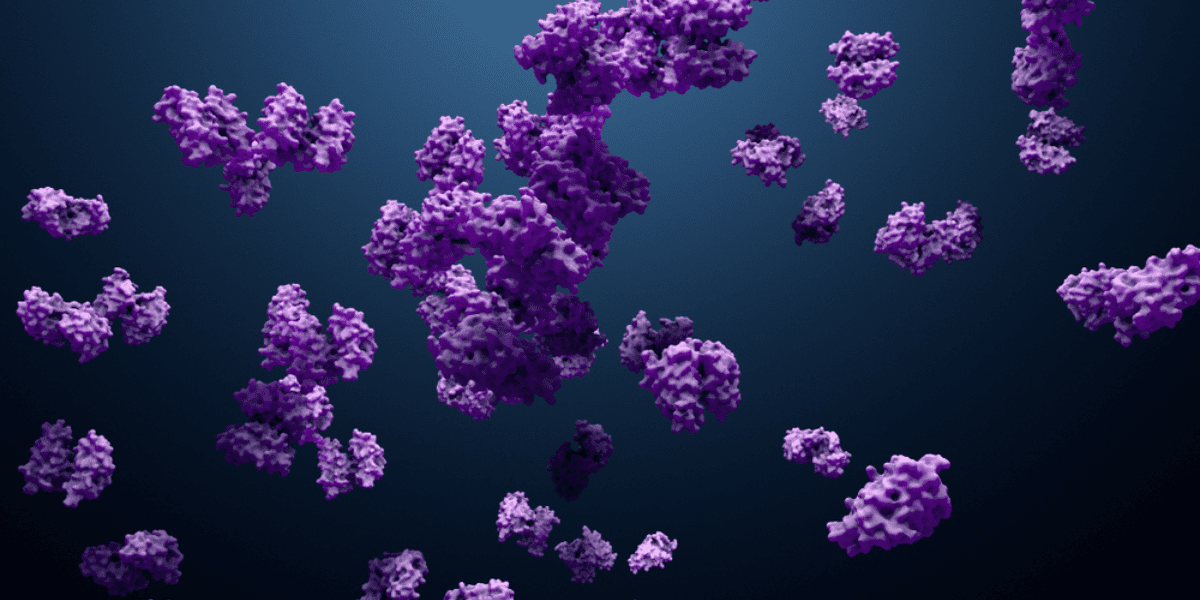
CHO (Chinese hamster ovary) cells have been at the forefront of animal cell biologists’ minds since the ‘50s. Since then, they have become the go-to for pharmaceutical companies and other research laboratories working to understand protein structures.
Just how are CHO Cells utilized in cell lines for recombinant protein production? And further, why are they the go-to cells?
As per usual with articles of this nature, it’s important to address all education levels; from new cell biologists to published researchers. If you’re versed in CHO cells and recombinant protein production, feel free to skip ahead to: Part 2 – Piecing It All Together where we also discuss the best cell sorter.
Otherwise, if you’re new, let’s first break down the basics.
To fully understand the topic at hand (the title of this article is quite the mouthful if you’re relatively new), it helps to understand each piece individually. To that end, the below will be discussed:
Perhaps right now, these concepts blur together like an out-of-focus camera. Let us zoom in slowly to reveal how the evolution of CHO cell line development happened, and how they’re utilized today.
At its core, a recombinant protein is a therapeutic protein that has been manipulated for one of many purposes. Three of which commonly are:
The process of genetic manipulation which leads to the creation of these recombinant proteins is called (unexcitedly) “recombinant protein production.” There are a number of different protein expression systems that can be utilized for these mutant changes, including but not limited to:
When working with these systems, each expression system has their unique advantages. For example, bacterial expression systems (particularly E. coli) are incredibly scalable and have a low cost. They enable simple culture conditions, and don’t require the leg work that other systems (like insect or mammalian expression systems) need. In return, the downside of bacteria is that it may be difficult to express eukaryotic proteins (aka human or mammalian proteins). While this makes it easy for protein structural analysis, antibody generation, and functional in cell line assays, it’s not ideal for complex protein production and analysis.
Per this article, the focus here is not to describe each of the above protein expression systems (as unique and interesting as they are). The purpose is to glean insights into the last listed item—mammalian expression systems, and in particular, the Chinese hamster ovary cell.
Since their initial promise in the 1950s, CHO cells, short for Chinese Hamster Ovary cells, quickly exceeded scientists’ expectations in host cell cultures, cell line technology, and recombinant protein production.
The question then is, why? What makes these (seemingly random) cells greater than other mammalian expression systems?
The answer is a combination of happenstance and tradition.
Rodent cells, in general, were utilized early on for their ability to create uniform cell lines. Though, the more that was learned about different rodent cells, the clearer it became that one strain—Chinese hamster ovary cells—were superior.
The points represent happenstance. Science often relies on happenstance to reveal answers and solutions. In this case, CHO cells happened to have all of these qualities that make them the ideal candidate for work in cell biology.
Where “tradition” comes into play is from the question—is there a better cell type to use? The answer is probably. However, to test every single cell type in the world would be a tremendous effort. With CHO cells being modifiable, fast-growing, and compatible with human cells, the question is then: is there a reason to spend the tremendous effort seeking out a better type or is it more worthwhile to utilize the (now) mountains of information on CHO cells?
To bring back the analogy made earlier, perhaps the lens is starting to focus—Mammalian expression systems are ideal for their complex protein production capabilities. And CHO cells demonstrate tremendous qualities for recombinant protein production including modifiability, growth, and compatibility.
Plus, the speed of protein production matters; at least, it was a driving factor in the early cell culture days. In Molly Hunter’s 2018 paper, Optimization of Protein Expression in Mammalian Cells, she writes:
Traditional laboratory‐scale tissue culture using culture dishes seldom produces more than a few micrograms of purified proteins, antibodies, or viruses from cultures of adherent cells. With burgeoning needs for milligrams of protein for crystallography, drug discovery, or feasibility tests of a novel drug, the static tissue culture dish has been replaced by large‐scale systems.
The large-scale systems came in the form of cell line technology.
Both human embryonic kidney cells and CHO cells can be utilized for recombinant protein production. In fact, there are hundreds of cells that can be used; CHO cells being the premium product.
For one, CHO cells make it easy to scale up production:
From there, they are ideal for transfection technology:
The transfection efficiency is key here. Viral CHO cells introduce the foreign DNA via transient transfection methods into cells. This then causes the generation of mutant proteins within the recombinant DNA (or recombinant proteins).
Two massive pain points for labs working in cell cultures, cell line production, recombinant protein production and more are:
These two pain points run hand-in-hand and are mitigated by two technologies. On one side, CHO cells are robust and allow for easy transfection in healthy populations. Low transfection efficiency rates can hamstring a lab’s production—misleading results and failed experiments. To avoid this, CHO cells need to be kept healthy while they’re sorted.
That’s where the second technology comes into play: flow cytometry. Flow cytometers are machines that use the properties of fluid dynamics, laser optics, fluorescently activated biomarkers, and machine technology to sort cells individually.
In short, flow cytometers use these principles as follows:
With the pressures of traditional flow cytometers, CHO cells are often dead or damaged by the time it comes to performing the recombinant protein production. However, advances in cytometry have allowed companies like NanoCellect to reimagine the flow cytometer’s design.
Using pressures of less than 2 psi (traditional pressures are above 20 psi), NanoCellect’s Wolf Cell Sorter is able to keep a significantly higher portion of CHO cells alive for proper CHO cell line work.
Considering that pharmaceutical research and development has only been increasing year after year, it’s likely CHO cells will continue to be the go-to expression system for recombinant proteins. With their flexible utility, ease of use, and human cell compatibility, they are ideal for each step of the process—from quick growth to transfection to protein production.
If your lab is utilizing CHO cells for all their benefits, then you need to make the most out of each experiment—especially with the amount of time and activity invested in the experiments. For this, you need healthy cells…
And healthy cells need NanoCellect.
Say hello to happy cells with the WOLF G2 Cell Sorter.
Sources:


