
In plant biology, isolating viable, healthy cells — whether microspores, protoplasts, or microalgae — is a major technical challenge. Traditional cell sorters often rely on high-pressure, high-shear fluidics that can damage delicate cells, compromise membrane integrity, or reduce viability.
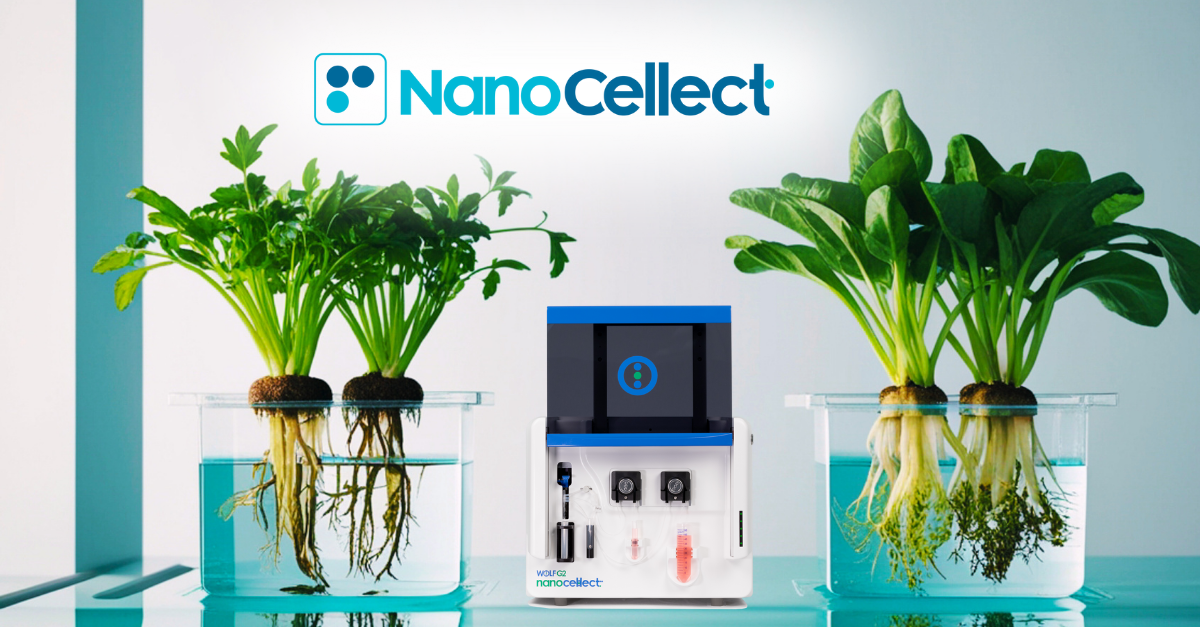
The WOLF G2® Cell Sorter, however, uses a microfluidic, low-pressure (< 2 psi) sorting mechanism, with a piezo-acoustic actuator and disposable cartridges to gently direct cells into collection channels. This gentle, sterile, aerosol-free design allows the use of custom sheath fluids — including plant culture media — which is critical for preserving viability of sensitive plant cells. Nanocellect
Because of these features, the WOLF G2 is especially well-suited for workflows that require live, healthy cells post-sort: single-cell genomics, plant regeneration, crop improvement, plant breeding, and more.
One of the most compelling plant biology applications demonstrated with WOLF G2 Cell Sorter involves the culture of microspores (immature pollen grains) from crop plants. Conventional breeding to produce homozygous lines often takes many generations; microspore culture — leading to haploid embryos and then doubled-haploid (DH) plants — can dramatically speed up the process.
However, only a small fraction of microspores typically respond to the induction conditions. To boost efficiency, researchers used WOLF G2 to enrich for those microspores that show signs of being in the embryogenic (i.e. totipotent) state. Read the application note.
Sorting was based on parameters like size (FSC-H), internal complexity (BSC-H), and green autofluorescence (FL1; B525) — the latter being a proxy indicating physiological state related to embryogenic potential.
Distinct populations (e.g. high-green vs mid/low-green) emerged; mid/low-green populations corresponded to embryogenic microspores, which then went on to divide, form embryos, and regenerate into plants.
Sorted populations showed faster development (greened earlier) compared to unsorted controls.
By enriching for embryogenic microspores, WOLF G2 dramatically improves the efficiency of DH production pipelines — reducing wasted cultures, accelerating breeding, and enabling more reliable downstream uses such as mutagenesis, transformation, or gene editing.
A second, highly relevant application note involves sorting protoplasts — plant cells stripped of their cell wall — which are widely used for transient expression assays, gene editing, cell biology, and regeneration studies. The traditional challenge: protoplasts are fragile, sensitive to pressure, shear stress, and osmotic shock — especially during sorting.
The application note from NanoCellect demonstrates that WOLF G2 can successfully isolate and enrich mesophyll protoplasts from leaves of, e.g., tomato plants:
Leaf tissue was enzymatically digested to release protoplasts; after gentle filtration and washing, protoplasts were suspended in a plant culture medium (not a standard buffer) to better maintain osmotic balance.
Before sorting, researchers assessed size distribution and optimized pre-sort procedures; large cells (e.g. > 50 µm) can pose a challenge — in such cases, re-filtering or adjusting osmolarity helps.
During sorting, the WOLF was primed with sterile-filtered plant culture medium as sheath fluid (avoiding low-osmolarity buffers like PBS which would lyse protoplasts).
Sorting gates were based on chlorophyll autofluorescence (to discriminate intact protoplasts vs free chloroplasts/debris) and scatter (size), enabling separation of protoplast classes.
Post-sort microscopy showed that protoplasts remained intact (no excessive lysis) — free chloroplasts/debris were significantly reduced, and intact mesophyll protoplasts of ~30–50 μm diameter were successfully enriched.
Enriching viable protoplasts opens up many downstream applications — transient gene expression assays, transformation, regeneration, CRISPR-based editing, transcriptomics/proteomics, single-cell analyses — all while maintaining cell integrity and viability. This is a major advantage over conventional droplet sorters which often compromise protoplast health.
Beyond multicellular plants, WOLF G2 Cell Sorter also shows value for microalgae — unicellular photosynthetic organisms increasingly used in biotechnology, biofuels, environmental studies, and basic research. In an application note with a GFP-expressing strain of Chlamydomonas reinhardtii, researchers demonstrated:
Bulk and single-cell sorting of GFP-positive transgenic microalgae.
After sorting, the GFP-positive microalgae exhibited high viability (> 80 %) and robust growth over a three-week period.
Enrichment of GFP+ cells exceeded 93%, indicating very effective selection of the target population.
Because the WOLF G2 Cell Sorter is portable, compact (bench-top), and uses gentle microfluidics rather than harsh jet-based sorters, it’s ideally suited for sorting delicate microalgae — which can be sensitive to shear stress and osmotic shock.
Stable cell-line development; selection or isolation of mutants; “omics” studies; screening for high-value traits; environmental monitoring; even discovery and isolation of new algal species.
The three examples above — embryogenic microspores in crop plants, transgenic microalgae, and leaf protoplasts — illustrate how WOLF G2 bridges a gap: enabling researchers to isolate live, intact, functional plant or plant-like cells for downstream applications that require viability: regeneration, transformation, single-cell genomics, high-throughput screening, and more.
More broadly:
Accelerated breeding programs: For crops, the ability to produce doubled-haploid lines quickly via microspore enrichment can drastically shorten generation times.
Improved genetic engineering and gene editing workflows: Because sorted cells remain viable, downstream transformations, CRISPR-editing, or other manipulations are more likely to succeed.
Microalgae biotechnology: Microalgae have immense potential for biofuels, nutraceuticals, carbon capture, biosynthesis of high-value metabolites, or as models for environmental biology. Gentle sorting improves the toolbox for selecting and maintaining desirable strains.
Single-cell studies in plant systems: As the field moves toward single-cell genomics, transcriptomics, proteomics — being able to isolate single live plant cells (microspores, protoplasts, algae) is a critical enabling technology. The WOLF G2 Cell Sorter is explicitly designed for such plant biology applications.
Of course, using WOLF G2 for plant biology does come with practical considerations:
Size limitations — and need for pre-filtering or osmolarity adjustments: For larger plant cells (e.g. big protoplasts), sorting may require pre-filtering (e.g. removing > 50 µm cells) or adjusting the osmolarity of the sorting media to shrink cells.
Need for proper sheath fluid: Using incompatible buffers (e.g. PBS) risks osmotic shock; for plant cells, using a compatible culture medium as sheath is critical for viability.
Optimization of gating strategies: Especially when relying on autofluorescence (e.g. chlorophyll) or induced fluorescence (e.g. GFP), plus scatter parameters — these may need to be customized depending on cell type and experiment goals.
Throughput limitations: As a gentler sorter, the WOLF G2 trades off some throughput for viability: high-shear droplet sorters may sort faster, but at the expense of cell health. For large-scale sorting, this trade-off must be considered depending on downstream applications.
The WOLF G2 Cell Sorter represents a meaningful step forward in bringing the power of flow cytometry and cell sorting to the more fragile world of plant cells and microalgae. By combining microfluidic gentleness, low-pressure sorting, sterile disposable cartridges, and multi-color fluorescence capabilities, it enables researchers to isolate viable, functional plant cells for regeneration, transformation, single-cell analyses, and beyond.
For plant biologists, breeders, and biotechnologists aiming to accelerate breeding cycles, perform gene editing, or explore novel algae-based workflows — the WOLF G2 offers a practical, effective, and cost effective tool.


