
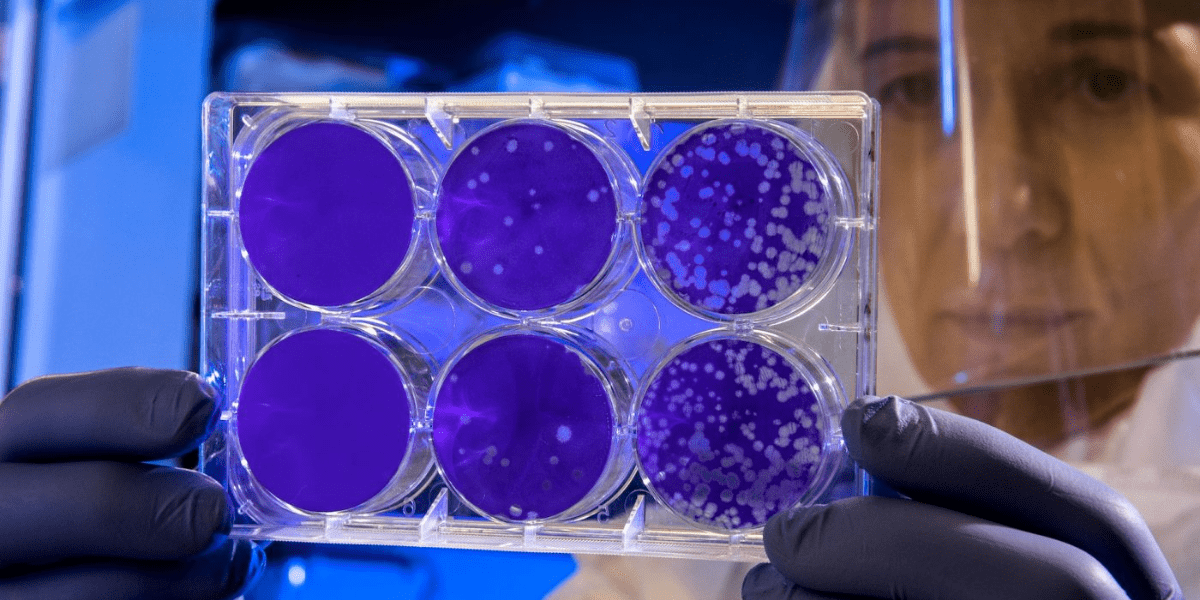
Flow cytometry has been around for decades and has contributed to vital research on deadly diseases like cancer, malaria, tuberculosis, and HIV, both in the lab and out in the field. Not only does it help advance known treatments and therapies for various chronic diseases, but it also helps understand and develop treatment for emerging infectious diseases.
So how does flow cytometry relate to a hot topic like infectious disease?
And how exactly is flow cytometry used to study infectious disease?
Read on for more on how the cell sorter works, how it’s used for infectious disease research, and which devices are best for the process.
It’s a device that performs the following actions to cells suspended in a solution:
When analyzing cells, flow cytometry analysis can identify quite a few features, like:
During its long tenure as a research instrument, flow cytometers have typically been big and cumbersome—until recently, that is. Some newer models have become far more efficient, portable, and easy-to-use thanks to innovation and advancements in the field. But more on that later.
You may be wondering how exactly this device accomplishes such outstanding analytical feats on such a tiny scale.
The secret? A mix of fluidics, laser optics, light detectors, fluorescence, and software.
Here’s what happens when you place a cell suspension in a flow cytometer:
But how does scatter help you to analyze cells? These light measurements indicate different properties of the cell, such as:
By combining these two readings, researchers can now distinguish between different cell types in a mixture. This identification allows them to label, separate, and sort them for further review.
To identify further cell properties in a sample, researchers can also stain or dye cells with fluorophores: fluorescent markers that can be excited by and emit specific wavelengths of light.
These markers bind to different components that researchers may want to identify, such as:
A flow cytometer can then detect the light emitted by the fluorophores in each cell and based on their intensity, measure the relative amount of that specific component. This procedure is called immunophenotyping, which is crucial for disease diagnosis and prognosis.
The more fluorophore colors your flow cytometer allows you to use, the more components you can identify at once.
This fascinating technology has been used for years in a variety of applications. In one notable application, it has identified how many CD4+ versus CD8+ T lymphocytes there are in blood samples to discern whether an HIV infection has led to AIDS, and to what degree anti-HIV medication is working.
In addition to this noble cause, flow cytometry can also do the following:
Flow cytometry is essential in infectious disease research and treatment. It allows for a simple and fast way to study, diagnose, identify spread, and inform appropriate treatment strategies.
With infectious diseases present in overwhelming numbers—AIDS and tuberculosis alone are responsible for 4.5 million deaths annually—affordable, efficient, and reliable immunophenotyping and cell isolation are vital in the battle for prevention, treatment, and eradication.
With new microbial pathogens constantly springing up from all corners of the world, flow cytometry, more than ever, is fundamental in controlling the spread of a viral infection.
Here are the main ways flow cytometers assist in the treatment and study of infectious disease:
Flow cytometry enables public health research with these advantages:
Biosecurity – measures taken to stop the introduction or spread of harmful organisms – applications for flow cytometry are as follows:
By quickly identifying biological threats and pathogens in an efficient way, flow cytometers allow researchers to effectively tackle multiple infectious diseases, by testing for a versatile array of characteristics—saving lives along the way.
Flow cytometers perform this incredibly detailed analysis in a matter of minutes. Impressive. However, the quality of such testing is based on several factors, including:
A bulky, difficult-to-use flow cytometer can result in misuse by lab personnel and poor results. A poorly designed cell sorting feature can lead to contamination between samples, thereby wasting valuable cells and ruining important results.
Most importantly, a flow cytometer that exerts too much pressure can damage cells and reduce the viability of a cell population. Dead cells can become distracting noise in data analysis or result in complete experimental failure if the cells are sorted. When it comes to the crucial and precise act of single cell analysis and sorting, cell death is the last thing you want.
That’s where the WOLF Cell Sorter comes in.
NanoCellect’s WOLF-G2® Cell Sorter and N1 Single-Cell Dispenser mitigate these common threats against successful experiments through their superior design and intuitive software. Thanks to innovative engineering, researchers no longer have to worry about cell death, contaminated samples, or complicated instrumentation.
Here’s how it stands out:
For single cell multiomics and sorting, choose a device that’s gentle, simple, and reliable. With the WOLF G2 Cell Sorter you get happy cells and better science.
Sources:


